Operators and investors in leisure property are not facing a single change, but rather an accumulation of tax and operational burdens occurring simultaneously. For campsites, holiday parks and marinas, this means a shift in an assumption that had long been taken for granted: that growth in the number of units automatically leads to growth in returns. That assumption is proving increasingly inaccurate.
Four developments taking place simultaneously
Private investors in holiday property generally fall under Box 3, where the actual return is taxed more heavily than before — maintenance and management costs are often not allowed as tax deductions, which directly affects the net return. In addition, VAT on short-term lettings (accommodation) has risen from 9 to 21 per cent, which significantly reduces the margin on rental income. Apart from these tax considerations, operations themselves are under pressure due to rising labour costs in the hospitality and leisure sectors, and higher energy prices — particularly for a sector with energy-intensive facilities such as swimming pools, sanitary blocks and heated communal areas.
What this stacking amounts to
What is remarkable about this period is not a single increase in the tax burden, but the fact that tax pressures (Box 3, VAT) and operational cost pressures (wages, energy) are occurring simultaneously. For private owners, the net return is falling; for operators, costs are rising. Both trends are pushing in the same direction: the return an investment must generate to remain attractive is higher than it was a few years ago.
What this means for investment decisions
This has two direct consequences. Firstly, the quality of the concept becomes more important than the quantity of units on offer: a development with strong positioning and a high occupancy rate performs better than one that has simply built more units. Secondly, the cost of an investment becomes a direct lever on the return: with revenues remaining the same, a lower investment per unit leads to a correspondingly higher ROI.
The role of cost price in a changing landscape
This is an area where many existing providers in the sector are still failing to respond adequately. Those who continue to operate using the same production methods and cost structure as before will see their profitability come under pressure due to the cumulative costs. Those who are able to structurally reduce the unit cost — without compromising on quality — can actually offset or even exceed the impact of the changed tax and operational environment.
How Revolution Housing Solutions is responding to this
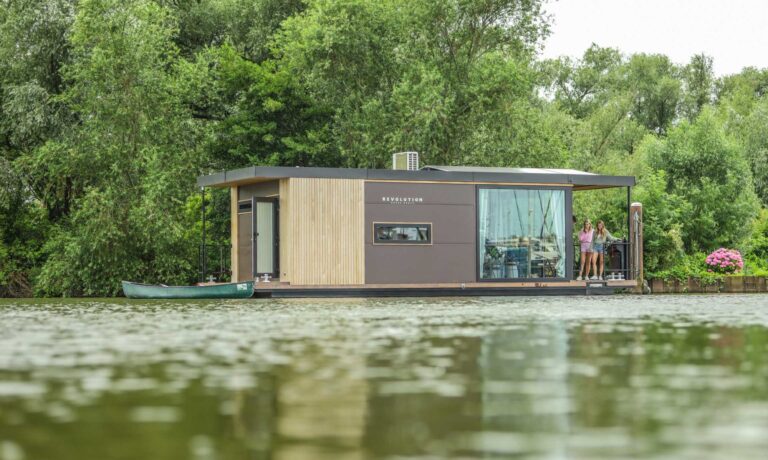
Revolution Housing Solutions develops leisure concepts based on the operational model, rather than the product itself. Thanks to our in-house production at a factory in Bosnia and Herzegovina, where production costs are significantly lower than those typically found in the Netherlands, we are able to deliver higher quality at a more competitive cost. In a market where tax and operational costs are rising, this is not only a price advantage but also a direct improvement in a project’s viability.
Would you like to know what the combined tax and operational pressures actually mean for your site’s business case? Revolution Housing Solutions contributes ideas from the very first calculation.